

30Nov

An Overview of Leave Types In A HR Management Software

From working in a setup where the center of power was with the employer to watch the shift of power to the employee, we have come a long way. The human resource management norms went for a toss in the last few years.

Businesses started taking employees seriously and taking care of every little grievance. Moreover, the leave management system plays an enormous role in employee engagement and retention.

Companies exhibit their progressive aspect by cultivating a great work environment for the employees to feel appreciated and energetic. Let us discuss a few leave types that every employer must know about to map out the leave management approach in their organization.

Types of leaves

The law body of the nation has minimal interference in the leave management scenario at work. However, they have outlined the specifics of the leave policy, which has been accepted by employers widely.
Let us go through the popular types of leaves that employers prefer to offer!

1. Privilege leave (PL)

Privilege Leave (sometimes known as Earned Leaves) is the type of leave employees earn by being present during the working days. In some parts of the world, these leaves are also called Flexi. To avail of these leaves, employees must plan and inform their reporting managers ahead of time. The best part of the leave type is it can be carried forward to the next financial year.

2. Casual Leave (CL)

Some companies provide casual leave apart from earned leaves. Such type of leaves compensates for unforeseen situations and of utmost emergency. CL is mandatory in many states. Moreover, some employers combine the entitlements of Casual leave and Sick leave to simplify the leave policy.

3. Sick leave (SL)

Sick Leaves are also known as medical leaves, which are extended to employees on the grounds of sickness and accidental cases. Sick Leaves are mandatory as per the law. However, employees often tend to misuse SL. Therefore, employers seek a medical certificate to validate the leave.

4. Maternity Leave (ML)

The Act of Maternity Benefit 1961 mandates that employers provide 26 weeks of paid leave to women who have worked for at least 80 days and are expecting a delivery date. Maternity Benefits is a central government act applicable to an individual’s first two children.

5. Compensatory Leave (Comp-Off)

Comp-Off is a leave that is entitled to employees in case of emergency. Employees who have been working on the weekends or holidays to hand over the deliverables on priority can claim a comp-off on a workday.

6. Marriage Leave

Some companies provide special leave for employees during the marriage. The employer can provide marriage leave from anywhere between 1-15 days. Moreover, the HR department can ask for the marriage invitation card or a marriage certificate as proof of leave approval.

7. Paternity leave

Paternity leave is extended to employees who are expecting to be fathers. It is a leave for fathers to take care of their newborn and the mother. The employer can grant the leave for a specific time from the date of birth of the child.

8. Bereavement Leave

Bereavement leave is extended to an employee who has lost a family member or a loved one to death. It is the leave to participate in the person’s last rites and grieve. This kind of leave is called compassionate leave in some parts of the world.

**Fun fact: Some companies also allow bereavement to leave for the death of an employee’s pet!

9. Leave without Pay (LWP)

At times employees run out of balance leaves of all types but still seek time off. Those leaves are categorized as Leave without Pay (LWP). During payroll processing, employers deduct salaries for the number of LWPs in a month.

The Way Forward

Every organization must have a static and progressive leave management policy. Often employees assess the affluence of a company from the leave policy. If you have aimed at retaining employees for a longer period, you must have a progressive leave policy for your employees so that they feel valued.

 

29Nov

A Guide to Seamless Performance Management Using an HRMS

How do you encourage great talents in the workplace? Now one might have several answers like appraisal, appreciation, accreditation etc. However, we believe the right way to encourage talent is by having an agile method of identifying their contribution.

The performance management system in an organization determines what heights it can conquer soon. The holistic process of performance management involves continuous reviews, feedback exchange, and training for upskilling.

Moreover, a performance management process must enlighten the immediate managers and hire management about the competencies, strengths, weaknesses etc. If long-term employee retainment and organizational growth is the goal, then its imperative for an organization to invest time, effort, and possible money into creating an agile performance management method.

Challenges of Manual Performance Management

Well, we have already stepped into the era of automation, and businesses have started discarding the manual ways of performance management. Businesses across the globe seem to be turning up to automation software solutions for performance management.

However, if you have not gotten over the manual process of payroll management process yet, then we can give you a handful of valid reasons that might change your mind.

  • It takes you time to set the KRAs and KPIs. Moreover, maintaining them manually in the excel sheets makes trackability more challenging than ever!
  • Managers might not analyze it accurately every month.
  • Collating performance since the joining date of the employee might be challenging.
  • Poorly performing employees might not get proper assistance to level up their performances.

Primary Features of Performance Management

Performance management system tools have several features that can make the process of rigorous reviews a very convenient one! The best HRMS systems have the The following pointers will bring you the prominent features of a common performance management module of an HRMS.

• 360-Degree Feedback:

A healthy performance management system evaluates a candidate in every which way possible and does not just stick to the hierarchical review system. Hence, a 360-degree feedbacking system makes for it and enables a fair assessment of performance in the organization

• Monthly review Model:

To keep track of the overall performance of an employee, a monthly review system is one of the most promising solutions. A month of time is the apt period to evaluate performances.

• Identification of training requirements:

With a performance management system, you can identify the weaknesses of your employees and help them overcome those shortcomings with the right training.

• A valuable tool to set KPIs and KRAs

You can set achievable and trackable goals using a dedicated performance management system. It makes the review system way more measurable.

The Bottom Line

Do you know what is an imperative part of a winning workplace culture? – Opportunity for talents. For that, an organization must have a promising performance management system process. Moreover, if you want to manage the mundane activities of HR wing at a go with absolutely no hassle, you can settle on the best HR software solution with a dedicated payroll management module.

24Nov

How to Build a Unique Employee Benefits Program?

For an organization to implement a successful employee benefits program, it is critical to define its goal before implementing it. This practice will serve as a guide in the establishment and design of the benefits program. It does not produce a list of benefits but provides an overview of the organization’s goals.

This must make you wonder, what are the best employee benefits?

An employee benefits package should be such that it should aid in implementing organizational change in the long run.

Consider elements such as the number of employees in the organization, the location of your office, and so on when developing employee benefit goals. The following are a few methods to create a unique employee benefits package.

Having Clear Goals

Having clearly defined and attainable goals will keep you focused and motivated as you decide which benefits to provide your employees.

Furthermore, your primary goals for providing employee benefits must be:

  • Attracting and sustaining prospective clients.
  • Working within the constraints of the budget.
  • To Have distinct labor-market benefits.
  • Having Benefits that follow state and federal laws.
  • Surprising your employees with a special corporate discount program.

Meaningful Benefits

The perks that your firm will provide must complement those of your employees. Knowing your employees’ desires is essential when establishing an employee benefits package.

Your workplace will be a mix of veteran staff and millennials. Keeping this in mind, you must establish a foundation of ideas that will benefit both personnel. It would be best if you also linked the advantages with their ideas.

Not only will this boost your employees’ productivity, but it will also increase their loyalty to your firm.

Conducting Surveys

Choosing benefits for your employees can be difficult, and you must be extremely particular when making your decision.

In the long run, your benefits package will be critical in meeting company aims and goals.

However, how can you decide which benefits are ideal for your employees? Health insurance, retirement plans, health plans, insurance plans, and other benefits are common. Do you offer something in addition to these benefits?

You can conduct a poll to learn more about your employees’ perspectives. The survey will include questions about the benefits your employees desire. After completing the survey, you will have a better understanding of what your employees want and what they expect.

This way, you’ll have a comprehensive benefits package that meets everyone’s needs. Furthermore, this will give your staff the idea that you care about them and have a unique business culture.

ConfluxHR is the ideal choice for conducting surveys for startups, SMEs, and SMBs. It is strong, transparent, and user-friendly and solves a variety of problems.

Do You Want to Learn More About ConfluxHR? Please visit this page.

Financially Stable Benefits

You can choose to concentrate on the rewards, but you must also consider the money you will invest. You must construct the program so that the benefits you deliver are within your budget.

Spend only what you can afford if your organization is small. Make your approach strategic and specific. Keep track of the advantages your competitors have to offer. This will give you a clear image of the steps you must take.

Remember, you will offer a few employee benefits program that your competitors do not. By doing so, you may keep your most valuable assets while also attracting potential recruits.

Keep the benefits within your budget and gradually increase them over time. This will be strategic, and it will also aid in the steady growth of your finances.

Optional Benefits

The remainder of the benefits package will be optional or chosen by you for your employees. Optional benefits include the following:

Pension plans or retirement benefits for your employees—a program in which your company assists them by contributing to their retirement funds.

You can also provide paid vacation packages to your employees who have performed admirably in their roles. They worked hard and attempted to finish their assignment. And taking a few days off helps revitalize your personnel while lowering burnout. Setting a good example that hard work pays off.

Another one of your optional perks may be sick leave with full payment. You will retain your most valuable assets if you do so. You will also be able to instill a sense of loyalty in them.

Tuition reimbursement, skill development programs, child care subsidies, financial planning, disability insurance, health care facilities, and other unique employee benefits may be benefitial for your organization.

Make your benefits program more effective and sustainable by incorporating new ideas whenever possible. Give each employee an annual account of total salary, including benefits, to help them realize any optional benefits you provide.

23Nov

Personnel Management Vs. HRMS- Objectives, Functions & More!

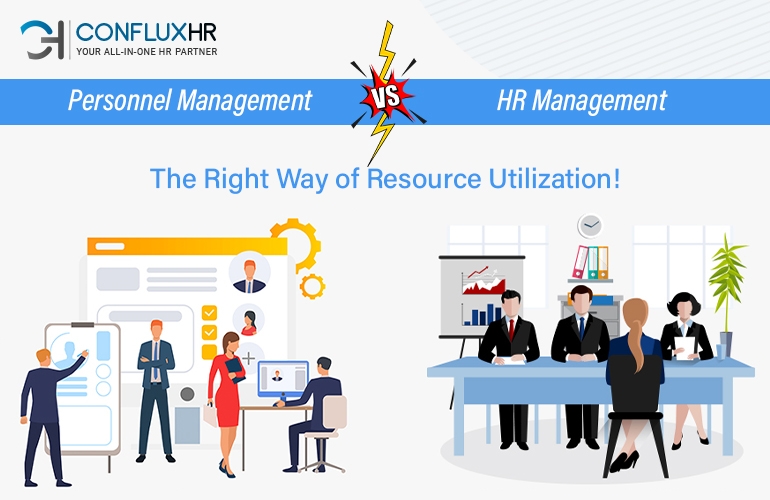
Personnel and human resource management are two very different concepts in theory and orientation. The personnel management system focuses on the utilization of resources. However, human resource management is the modern Way of enhancing employees’ productivity.

There is a fine line of Difference between both concepts. Personnel management was the initial approach for enhancing organizational productivity. Today, the modernized approach to employee engagement has called for a renaissance. Human resource management is all about establishing healthy work association with the employees to play a significant role in retaining the employees in the future.

Key Difference between personnel management and HRM

Human resource management is the evolved version of human resource management. Personnel management does not allow employees to be treated as human beings in the first place. The personal management approach is indirect, unlike modern human resource management.

As per personnel management, the negotiation is done collectively with the union leader. Contrarily, as per human resource management, every employee has a separate individual contract with the organization.

HRM aims to achieve an ideal workplace and culture that energizes employees to give their best shots and stay for the long term. Hence, Human Resource Managers focus on enhancing business sustainability by creating a close-knit team and excellent work culture.

The nature and scope of HRM are to offer opportunities for resources to grow and contribute to organizational growth.

Most importantly, Human resource Management treats employees as humans first and resources later!

The Way forward!

Human resource management is proof of the renaissance of the corporate landscape. It is another progressive extension of personnel management that called off the shortcomings of the resource utilization approach.
Nowadays, retaining employees for the long term is immensely challenging. Employees are very much aware of their rights, and there is no way to treat human resources like tools for driving productivity. Hence, human resource management has evolved over the years to address employees’ concerns.


22Nov

Employee Upskilling: Skills Over Degrees

Using a skill-based hiring technique increases workplace diversity and productivity. It also reduces recruitment expenses and closes skill gaps. Thus, firms have elected to replace degree-based hiring with skills-based hiring.

‘Skills over degrees’ is an innovative approach to hiring. It represents a more fair, inclusive, and rewarding strategy for attracting top talent. In a candidate shortage, skill-based hiring addresses a variety of problems caused by degree requirements.

In addition, HR performance management tools can also assist firms with administering employee upskill courses for their existing candidates.

Here are four reasons why your company should focus on abilities over degrees:

Locate Skillful Applicants

A poor hire costs a company around INR 25,000. However, losing excellent employees costs close to INR 50,000 per employee.

Skills-based hiring focuses on a candidate’s abilities and competencies. This provides businesses with a clear picture of their ideal applicant. It also gives job seekers a realistic preview of the position’s demands and duties.

A college education helps shape an individual’s critical soft skills. Yet, it does not guarantee that a candidate possesses the necessary technical skills.

Hiring managers may feel more confident in a candidate’s interest if they have a degree. It may also provide exposure to a specific topic or course of study. Yet, it is not a reliable predictor of job performance or a candidate’s suitability for a position. It is only a supposition.

Skill-based Hiring Improves Employee Retention

The great resignation has dawned. Employee retention is currently one of the most significant concerns for firms worldwide. When using skills-based hiring, employers must understand the abilities required to succeed.

A skills-based examination simulates real-life experience in the job role. This provides the candidates with a more accurate representation of the job expectations. In general, this leads to greater job satisfaction.

Proven Skills Contribute More Than Theoretical Knowledge

Besides, employee upskilling is on the rise. HR performance management tools have played a key role in this development. Firms are seeking to upskill their existing employees. They are doing this to maintain a good employee retention figure.

The number of firms providing skill development programs to their employees is increasing. Employees with a degree want better pay due to their investment in education.

However, college graduates are more inclined to change jobs frequently in search of better opportunity. The best solution to this problem is employee upskilling using an HRMS Platform.

Offers Access to a Larger Talent Pool

Reducing candidate application requirements helps to reduce impediments. Degrees do not necessarily prove an applicant’s ability to fulfill the task.

Adopting a skills-based hiring approach exposes your company to candidates who earned their talents through non-traditional means such as on-the-job training or self-teaching. Thus, employers now have access to a bigger talent pool.

Enhances Workplace Diversity

In the recruitment industry, there is a growing emphasis on the value of diversity. Inclusion, creativity, and productivity enhance a company’s bottom-line performance.

Financial incentives should be one of many motivators for firms to prioritize diversity. Yet, skill-based hiring can help increase workforce diversity. Although, let us understand how a university degree contributes to the problem.

Skills-based hiring is based on selecting the job candidate with the skill set that best matches the role’s needs. Hiring based on education only sometimes favors underrepresented groups. Disadvantaged people in the educational system cannot receive the same degree of education.

This could be due to resource and funding constraints. Skills-based hiring does, however, eliminate the unconscious bias associated with pedigree. It makes it far more accessible to candidates from various socioeconomic positions.

Diversity has emerged as a top priority for both corporations and candidates. It impacts a company’s bottom line and is a major deciding factor for job searchers.

Last Thoughts

A degree can only get you a job; it cannot help you advance your career. It is your skill that attracts employers, clients, and managers, and it is a skill that raises or lowers a person. We are in a qualified candidate shortage.

In addition, this situation has arrived when over a third of the workforce lacks a college diploma. This should state the need to reconsider the value of degrees.

Major corporations are now emphasizing skills over degrees. The momentum is building for enterprises of all sizes to follow suit. The benefits of skills-based hiring are plain. It has a history of enhancing employee retention, hiring quality, and so on.

How Can an HRMS Platform Help You?

ConfluxHR addresses most of your hiring, onboarding, and upskilling problems. Our robust HRMS Platform can assist you in the following:

  • Scheduling and Conducting Interviews with Candidates
  • Administering Upskill Courses to Existing Employees
  • Leave and Attendance Management
  • Employee Performance Management
  • Onboarding and Exit Process Management

Also, our HR performance management tools can help you retain more employees for your organization.

Start Onboarding and Retaining Better with ConfluxHR!

17Nov

Decoding Resource Utilization- The A to Z of it & More!

Companies put all their effort into allocating the right resources. However, the valuable output depends on the employee’s contribution to the company (in billable tasks). Managing the same becomes a hectic task as a team starts growing.

Running a business is never a cakewalk. One of the significant challenges to thriving in the competition is scalability. Moreover, utilizing the strength of human resources is a mere trick, especially when you assign multiple projects to people.

Let us learn about resource utilization, its use, benefits, and the best way to go about it.

How are resource utilization and performance management related?

Resource utilization is a key indicator measuring each employee’s performance and efforts at each time. It is a crucial aspect of the business process which allows the project managers and the team leaders to foresee the availability of resources across various categories soon.

Resource utilization helps you use human resources in the best way to optimize overall business productivity. Undeniably, keeping track of the employee’s performance can be a boon to the overall productivity of an organization. Hence, the performance management process depends on resource utilization for optimized productivity.

What role does resource utilization play in performance management?

The resource allocation process is one of the most crucial aspects of performance optimization and management. The simple task of assigning tasks to employees becomes way more completed when the organization grows on a large scale.

How can an HRMS help in performance optimization?

Human resource management software can make resource management way easier than manual processes. They enhance the trackability of systems, be it documentation, performance tracking or attendance. Here are a few ways HRMS can enhance resource utilization, thereby taking several notches up organizational productivity!

  • Documentation is easy with an HRMS.

Documentation has a meaningful role to play when it comes to performance management. Enlisting the KPIs and noting the scores of the employee each passing month is only possible with an HRMS with a dedicated performance management system.

  • Satisfied employees with self-dependent HRMS

HRMS keeps the employees self-dependent regarding information and actions like leave application, resignation application etc. Hence, it increases the efficiency of employees and helps them perform better each passing day.

  • Formulates the resource management system

The control function of management cannot be focused on without performance management software. It formulates resource management by streamlining the process categorically. It redefines every bit of resource management with advanced technology.

  • Enhances visibility and trackability of operations

Most of the business operations are not trackable when done manually. An HRMS can make things way more visible and trackable. You can be better access to data and insights in general.

  • Helps in cost-cutting

HRMS can help you optimize the budget and cut the operational cost to a great extent. It also saves several annual hours of paperwork and other mundane activities, thereby freeing up HRs for other strategical tasks.

ConfluxHR is one of the most promising HRMS solution with reasonable ticket-size meant to make your business scalable and agile. Have you been looking for an intelligent human resource management solution? Then, book a demo now and let us show you around our product.


16Nov

Lay Offs- The Better Way to Enhance Exit Experience

How can the elephant of the name escape our attention regarding resource management? A layoff is a buzzword today, and the A-listers have extended enormous contributions exemplifying the sudden layoffs. Undeniably, we know the employees’ side of the story. Here is an overview of the other side.

Detaching work associated with an employee is not an easy option either way. It is an unpleasant situation with a series of formalities making it even more awkward. However, HR Managers can make this process super healthy and approachable.

How can haphazard offboarding make it worse?

The dangers of haphazard offboarding can have multiple repercussions. Determining the offboarding checklist is one of the most crucial aspects of the operational readiness of an organization. However, your employees must be aware of those steps after creating strong offboarding policies.

  • A haphazard process can often lead to awkward situations.
  • Manual management can often lead to skipping document formalities.
  • Poor timing and miscommunication often muddle the image of the organization.

Ultimately, it not only harms the brand image of the organization, but it also hampers the operational flow. Businesses often focus on other resource management processes and ignore exit management’s importance.

How can an HRMS help you manage your Exit Process superiorly?

HRMS has several benefits in terms of resource management. However, in this section, we will highlight the benefits of HRMS concerning the offboarding process.HRMS streamlines the offboarding process in the remote work culture

  • HRMS streamlines the offboarding process in the remote work culture
  • It standardizes the offboarding process
  • It makes the process efficient
  • It protects the brand of the employer
  • It simplifies the adherence to compliance

HRMS can save several working hours for your business. Besides, it can make every process of resource management super-easy. Exit management has a series of formalities. You can manage your long offboarding checklist at a go with an HRMS.

ConfluxHR is one of the most acclaimed HRMS solutions that can help you in all resource management processes. It leverages technology to help you optimize the business process and save your annual working hours to a great extent.

27Oct

Rising Health Concerns of Human Resources- Ways To Go About It!

Once in a blue moon, there comes a situation that knocks down every preparedness and norm! In the present times, Covid19 pandemic is one such situation. It challenges preparedness at all levels. Besides that, it also altered the norms forever and beyond.

Employee appeasement has always remained an unsolved puzzle for the corporate landscape. However, the pandemic has helped resolve some of it. Post Covid19, humanitarians have been speaking about the evident shift in human emotions. People want to feel cared for amidst all chaos.

Since human health has been vulnerable during the pandemic, people want their employer to show reasonable concern in every form. Therefore, the pandemic marked a clear shift in employee engagement and appeasement policies across the globe.

Let us help you with a few promising approaches to address employees’ rising health concerns.

1. Positive Behavioral patterns

Sick employees must feel a sense of positivity from the organization. Hence the TLs, managers, HRs, and everyone in the organization must empathize with the concerned employees.

2. Flexible work hours:

While sick, employees must be allowed flexible working hours to exercise their convenience. Flexible working hours are the need of the hour for employees suffering from health ailments. Hence, it can trigger a sense of fulfilment within the organization.

3. Treating Burn Out as a medical condition:

When WHO has recognized Burn Out as a medical condition, it is high time that the corporate world accepts it. It is a much better and quicker solution for employees to find a way out.

4. Maternity and Paternity Leave policies:

Maternity and paternity leave policies are another significant way to show concern for employees’ health and wellness. Being a parent is a major change, and everyone needs time to cope with it.

5. Health Insurance policies:

Employers must also invest some money in health insurance policies for their workforce. It ultimately builds and strengthens the trust of the employees in the employer.

The Way forward!

Remember, it is not showing concern for the employee’s health, but it is all about being concerned for them. All the above pointers give you a few ways to show employees your concerns. With an inclusive approach to shoulder the health burdens of employees, you can make your employees feel valued and cared for.

After all, good health is good business! Isn’t it?

17Oct

What Are The Trends That Will Change Global HR in 2025 and Beyond?

Before we dive into the future of HR Trends 2025, let us consider the existing situation of the HRM Industry:

Increased Outsourcing

Because of modern HRMS Platforms and the resulting employee independence, in-house HR departments are shrinking in size. Employees are doing much more on their own, thanks to self-service portals.

Specialists now handle many roles that used to be handled by the HR department. These professionals also include specialized HRMS Platforms like Conflux HR, which may streamline transactional duties like payroll and engagement management.

Core HR Competencies Have Changed

CHROs are now much involved in forecasting as well as comprehending long-term organizational goals. A metric analysis is also an essential component of basic HR operations.

Global HR Trends to Watch in 2025 and Beyond

Covid-19 has pushed HRs to reconsider all of their previous ‘best practices.’ The business environment is unlike before, and most projected trends have vanished.

To accurately assess the future, existing HR executives must understand everything they can about the industry, rivals, and business processes.

Remote working methods

With the rise of remote working, the new HR must adapt to a more diversified work environment. Training and development will become much more tailored and accessible via distant devices.

AI and Data

Despite fears that AI will replace humans, HR will benefit greatly from this technology. Furthermore, HR Chatbots may use conversational interfaces to evaluate and arrange people-centric data for seamless attendance tracking and payslip preparation.

Culture of Inclusion and the Gig Economy

In contrast to long-term occupations, the gig economy is based on short-term contracts or freelancers. This is growing more common in every industry throughout the world.

As a result, HR will need to rethink its current procedures to foster a more inclusive and varied culture.

Analyzing People

Global organizations also recognize the need to use data to:

  • evaluate recruiting techniques
  • detect skill set gaps
  • evaluate the supply and demand for talent

Many businesses are now focused on Predictive Analytics. HR no longer inquires about what happened or about why the event occured. The HR is now focusing on answering queries like “what will happen?”

Employee Knowledge

Organizations are redesigning traditional employee engagement tools to give employees a competitive advantage.

Concentrate on Cybersecurity

To address issues such as data confidentiality and employee privacy, new cyber security and WFH will develop trends to watch in 2025 and beyond. HR leaders’ KPIs will also change as they follow more strategic change management standards.

In the near future, HR will have ample time to focus on corporate values due to technological improvements and automated processes. ConfluxHR is one such HRMS platform that focuses on streamlining your core HR operations, which include everything from recruitment management to exit process management.

14Oct

Why is HR and Payroll Management Necessary for Entrepreneurs?

Payroll processing is one of the most significant and complex business operations. Every Entrepreneur aspires to be as efficient and successful as possible. Thus, a corporate entity must thoroughly understand payroll.

Entrepreneurs, in particular, must be mindful of this to deliver maximum pleasure to their staff and address their problems.

What Exactly is Payroll?

Payroll is the process of paying an employee’s wage in exchange for his contribution to the organization’s growth. It begins with the compilation of a list of paid personnel and concludes with the recording of expenses.

It is a sophisticated procedure that requires coordination from multiple departments, including payroll, human resources, legal, and finance. On the other hand, businesses can manage compliance issues at all levels by adopting cutting-edge technology.

In addition, a payroll cycle is an interval between two salary disbursements. Depending on business demands, salaries may be paid weekly, quarterly, or monthly. It is usually paid once a month in India.

Let us tell you more about the payroll processing of a business and how you may properly manage your company’s payroll.

HR and Payroll Management

An HR and Payroll Management System allows a corporation to keep track of its employees’ wages. The wage structure includes employee salaries, allowances, deductions, and net payouts. It also handles pay stub generation.

Payroll software can automate intricate computations. These computations are usually performed manually. A thorough payroll management system can save your company from costly compliance concerns.

The best performance management software(s) records an employee’s performance data. As a result, it supports businesses in acquiring a clear image of their employees’ performance and skills.

In addition, it also enables the management to arrange training based on the needs and requirements of each employee. This employee performance assessment can be useful for planning and general productivity enhancement.

The HR and Payroll Management System helps businesses reduce the number of individuals manually tracking attendance, salary, working hours, and income taxes, among other things. The repetitive nature of payroll duties might lead to boredom, leading to an error. As a result, enhancing your business process is always a smart idea. This is usually done so that reliable data is provided at every step.

Why is Payroll Setup and Processing Necessary?

Data security regulations are often rigorous. Employee information is maintained as private as possible, as evidenced by the many administrative and access privileges levels. It also provides employees with information on salary reductions.

Effective payroll processing also provides a thorough image of the company’s position in the market, which is necessary for a financial assessment. In the case of wage appraisals, simple calculation software may give the firm the full financial impact of such information.

In most cases, modern payroll systems, such as ConfluxHR, are as cost-effective as remote cloud options. The company only requires active registration to keep the database up to date. Employee payroll management systems by ConfluxHR are entirely free to use and can save your company a lot of money.


Let's Connect